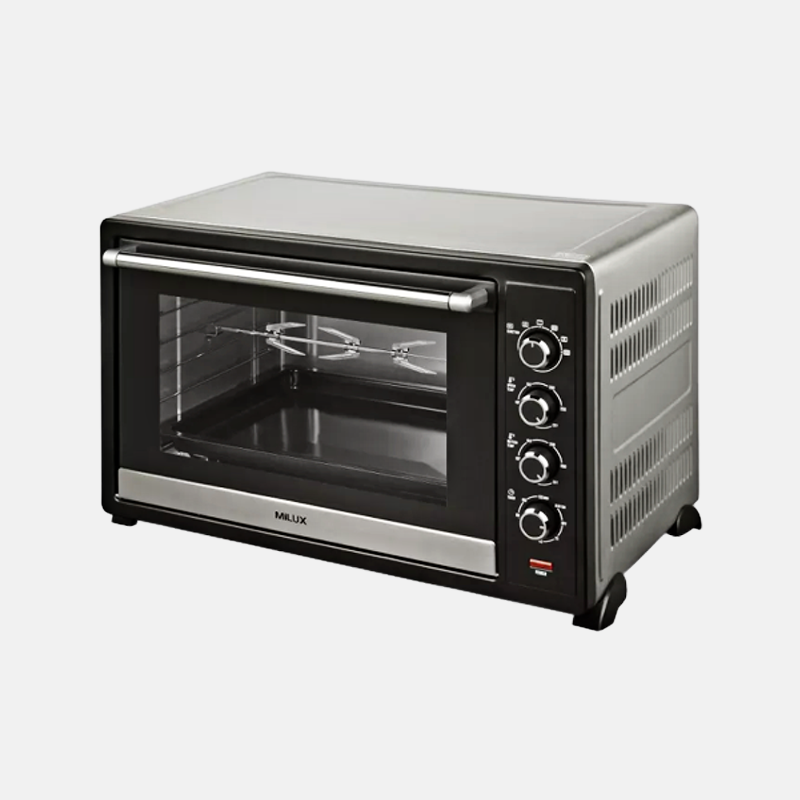
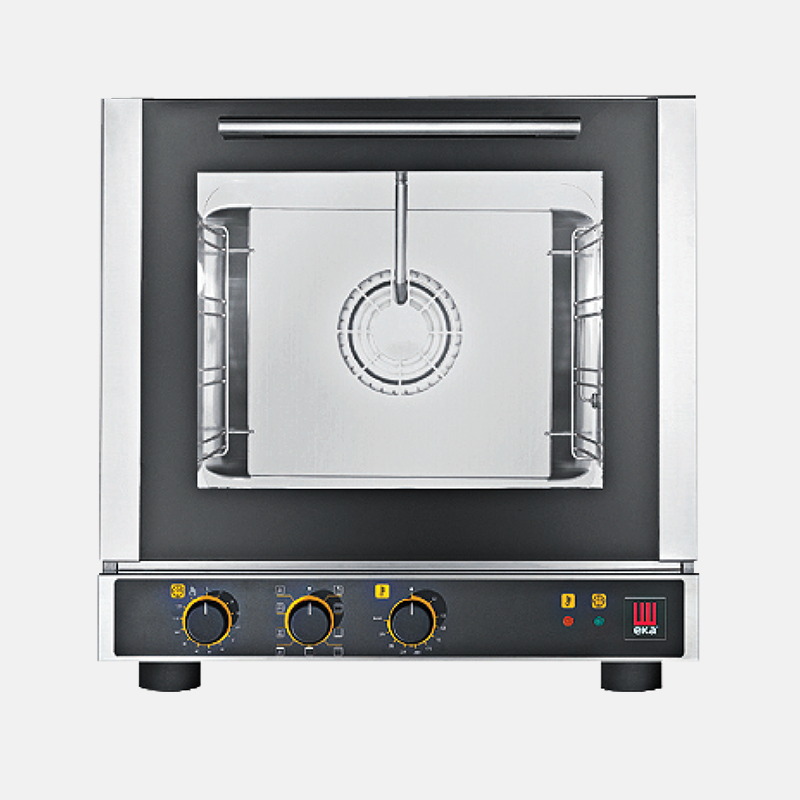
�� Specifications & Features (Detail) Parameter Value / Details Model / Name Milux Electric Oven MOT‑120FD (“MOT‑120”) Capacity 120 litres Power / Wattage 2,800 W Temperature Range From ~100 °C to 250 °C Heating Modes / Selectors 4-stage heating / selector: Off, Top heating, Bottom heating, Both top & bottom heating Convection / Rotisserie It has a knob for rotisserie & convection function Timer 60‑minute mechanical timer with automatic shut-off bell ring Door / Design French door (double glass door) design Interior Light / Cabin Light Yes — a cabin light / interior light function to see inside while baking Accessories Included 2 baking trays, grill rack, rotisserie kit, etc. Dimensions (L × W × H) ~ 750 × 553 × 485 mm Packaging / Box Size ~ 788 × 610 × 561 mm Gross Weight ~ 20.5 kg Warranty 1 Year Certification / Safety SIRIM certified in Malaysia (local regulatory compliance) Price (Official / Retail) On Milux’s site: RM 1,332.00 On Lazada: ~ RM 770.77 (promotion / discount) Product listing / example: Milux Electric Oven MOT‑120FD 120 L is a listing you can check (though price / stock may vary). ��️ How It Works / Use Cases & Operational Notes Heating & Temperature Control The oven allows you to control heating separately from the top and bottom elements. This is useful if you want, for instance, more bottom heat for pizza or more top heat for browning. For even baking, many users will use both heating elements together (top bottom). The convection / rotisserie setting helps with more uniform heat circulation (if used properly). Use convection especially when baking multiple trays or when you want more even browning. Timer & Long Bakes Because the timer is limited to 60 minutes, for longer bakes (e.g., slow roasts, bread proofing, multi-hour baking) you will need to monitor time and re-set the timer manually. Always check your food a bit before the timer ends, especially if you’re unfamiliar with how fast heat travels in this oven. Door & Access With French doors (double doors that swing open), you should ensure there’s enough clearance in your kitchen to open both doors fully. The double-glass allows you to see inside without opening the oven, reducing heat loss. Use the interior light to monitor progress. Space / Placement The physical dimensions (~75 × 55 × 48 cm) make it a large countertop appliance. Ensure proper ventilation behind and above the oven (don’t squeeze it tightly between cabinets). Make sure your countertop and structure can support ~20 kg plus contents. Electrical & Safety 2,800 W is a high draw. Ensure your outlet, plug, and wiring are rated appropriately (e.g. 13 A / 15 A circuit). Avoid using extension cords if possible. If you must, use a heavy-duty cable rated for the current. Keep heat-resistant materials around (trivets, pot holders). Always allow cooling time before cleaning or maintenance. ✅ Advantages & ⚠️ Possible Drawbacks / Limitations Pros Cons / Potential Issues Large capacity (120 L) — good for bulk baking, big trays Timer only goes to 60 minutes, which limits “set-and-forget” for longer tasks Versatile heating modes (top, bottom, both) plus convection / rotisserie Without perfect insulation or fan-assisted design, heat may be less uniform compared to premium ovens French door design / double-glass — better viewing and access Doors take space to swing out; may restrict use in tight kitchens Certified locally, warranty, local service support Price in retail might vary a lot; some listings offer steep discounts which might be grey market or reconditioned Relatively high wattage — can cook faster High power draw demands good electrical setup �� Tips / Best Practices for Use & Maintenance Preheat Properly: Always give enough time (10–15 min) to ensure the entire chamber reaches the target temperature. Use the Right Rack Position: For cakes, use the middle rack. For broiling or top-browning, use higher rack. For bottom crust (pizza, bread), use lower rack with both heating. Rotate / Swap: For large items, rotate trays (front/back) halfway through to improve uniformity. Regular Cleaning: After use (once cooled), wipe interior. Remove trays and racks and soak them, scrub gently. Avoid harsh abrasives on the glass doors. Check Door Seal / Hinges: Ensure doors close tightly to avoid heat loss. If the glass or seal gets worn, replacements may be necessary. Don’t Overfill: Leaving some space between items and sides helps airflow. Avoid Abrupt Cooling: Don’t splash cold water on a hot glass door — that may cause thermal shock and cracking.